Evaluating the KDP Interiors Retail Inventory Log Book for Self-Publishing
Selecting the appropriate interior template is a critical step in creating a functional low-content book for Amazon KDP. The KDP Interiors Retail Inventory Log Book serves as a specialized tool designed for small business owners, resellers, and inventory managers who require a physical tracking system. When evaluating this specific asset, publishers must look beyond the title and assess whether the technical specifications and layout align with current market demands and user needs. This evaluation focuses on the practical application of the 6″ x 9″ format, the utility of editable source files, and the strategic considerations for publishing a niche inventory tracker.
Understanding the Product Specifications and Utility
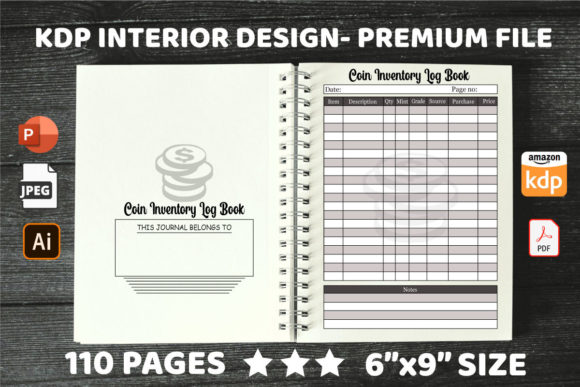
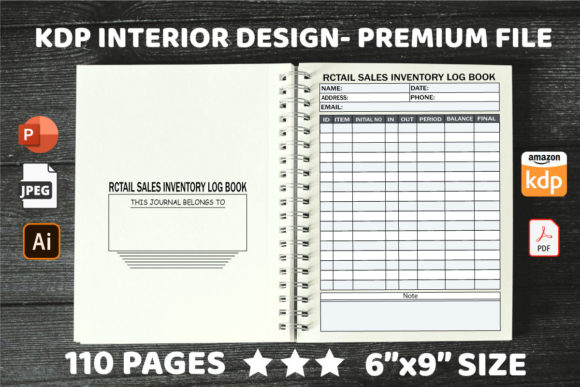
The core value proposition of this log book lies in its specific dimensional and structural configuration. At 6″ x 9″ inches, the book occupies a "sweet spot" in the low-content category. It is significantly more portable than standard 8.5″ x 11″ ledgers, making it suitable for retail environments where shelf space is limited or for vendors who manage inventory at pop-up markets and trade shows. However, this compact size imposes strict constraints on data density. Publishers must evaluate whether the column width in this specific template accommodates necessary SKU numbers, product descriptions, and pricing without appearing cramped.
The interior consists of 110 pages featuring a repeated two-page spread layout. This volume provides approximately 55 distinct logging sessions or inventory audits. For a daily tracker, this offers roughly two months of utility; for weekly audits, it extends to nearly a year. The "No Bleed" setting is a crucial technical specification that simplifies the printing process. By keeping all content within safe margins, this template eliminates the risk of text being trimmed during manufacturing. For new publishers or those prioritizing consistency over edge-to-edge design, no-bleed interiors reduce rejection rates and ensure a uniform appearance across different print runs.
The Strategic Value of Editable File Formats
A defining feature of this asset is the inclusion of PDF, AI (Adobe Illustrator), and PPT (PowerPoint) files. In the context of KDP publishing, editability is not merely a convenience; it is a competitive necessity. A static PDF limits a publisher to selling a generic commodity. Access to AI and PPT source files allows for significant differentiation:
- Niche Adaptation: Generic retail logs often fail to address specific verticals. Editable files allow publishers to rename headers from "Item Description" to "Vintage Clothing Grade" or "Electronic Component Serial," targeting underserved micro-niches.
- Branding Opportunities: Publishers can add logos, custom cover art integration, or proprietary tracking codes directly into the interior, transforming a public domain-style template into a branded product line.
- Layout Correction: If user feedback indicates that columns are too narrow or rows too short, source files enable immediate rectification without redesigning the entire spreadsheet from scratch.
- Bundling Potential: PowerPoint files specifically lower the barrier to entry for creators unfamiliar with vector software, enabling quick modifications to create variations (e.g., a "Large Print" version for older demographics).
Benefits and Tradeoffs of the 6x9 Format
When comparing the KDP Interiors Retail Inventory Log Book against larger alternatives, several tradeoffs emerge. The primary benefit of the 6x9 form factor is portability and perceived value. Users often perceive thicker, smaller books as more substantial than thin, large-format pamphlets. Additionally, shipping costs and storage requirements for sellers managing their own direct-to-consumer sales alongside KDP are lower with this size.
However, the tradeoff is writing space. Inventory management often requires detailed notes regarding condition, supplier discrepancies, or return reasons. A 6x9 page offers less horizontal real estate for tabular data. Publishers evaluating this template should print a test copy to verify usability. If the target audience requires extensive long-form notes per entry, this format may lead to negative reviews citing "insufficient space." Conversely, if the primary use case is quick-check auditing or high-volume SKU scanning with minimal annotation, the compact size is an advantage rather than a limitation.
Situational Fit: When This Template Aligns with Goals
This specific log book template is a strong fit for publishers targeting mobile or space-constrained professionals. Ideal user personas include:
- Flea Market and Craft Fair Vendors: These users operate in transient environments where a full-sized ledger is cumbersome. A 6x9 book fits easily into vendor bags and apron pockets.
- Home-Based Resellers: Individuals managing eBay, Poshmark, or Mercari inventories from home offices often prefer compact organizers that do not dominate desk space.
- Small Boutique Owners: Retailers with limited counter space need functional tools that maintain aesthetic appeal without cluttering the point-of-sale area.
- Publishers Building a Series: The editable nature makes this ideal for creating a cohesive brand identity across multiple related titles (e.g., "Retail Inventory," "Supplier Contact Log," and "Sales Tracker").
When to Consider Alternatives
Despite its versatility, the KDP Interiors Retail Inventory Log Book is not universally applicable. Publishers should consider alternative formats or custom designs in the following scenarios:
- Warehouse Management: Industrial or warehouse settings typically require 8.5x11 or larger formats to accommodate complex data sets, safety compliance checklists, and bulk quantity tracking. A 6x9 book lacks the authority and utility required in these environments.
- Digital-First Businesses: If the target audience relies heavily on barcode scanners and digital integration, a paper log may be viewed as obsolete. In such cases, hybrid journals that combine logging with QR codes linking to digital resources may perform better.
- High-Volume Data Entry: For businesses processing hundreds of SKUs daily, pre-printed paper logs are inefficient. These users typically seek tear-out sheets or carbonless duplicate forms, which differ structurally from standard bound KDP interiors.
- Saturated Generic Markets: If the publisher cannot utilize the editable files to create a unique angle, entering the generic "retail inventory" keyword space is unlikely to yield results. Without modification, this template competes directly with thousands of identical listings.
Practical Decision-Making Insights for Publishers
Evaluating this asset requires a balanced assessment of production effort versus market potential. Before purchasing or utilizing this template, conduct a gap analysis of existing top-selling inventory logs in the 6x9 category. Read three-star reviews specifically; these often reveal functional deficiencies in current offerings, such as "lines are too close together" or "no section for supplier cost." Use the provided AI or PPT files to solve these specific pain points.
Furthermore, consider the longevity of the design. Inventory practices evolve. Ensure the template uses timeless terminology or is easily updatable via the source files. Avoid overly stylized graphics inside the log pages that consume valuable whitespace. Functionality drives repeat purchases in the B2B and prosumer segments more than aesthetic novelty. Finally, verify that the licensing terms for the editable files permit commercial distribution on KDP without attribution requirements or royalty sharing, ensuring clear ownership of the final published work.
Ultimately, the KDP Interiors Retail Inventory Log Book represents a foundational asset rather than a finished product. Its value is realized only through strategic customization and precise audience targeting. Publishers who treat the 6x9 no-bleed format as a canvas for solving specific organizational problems will find it a viable component of their catalog. Those seeking a passive upload-and-forget solution may find the competitive landscape challenging. Success depends on leveraging the editable formats to bridge the gap between generic utility and specific user needs.