Evaluating Daily Planner 8.5x11 KDP Interiors for Low-Content Publishing
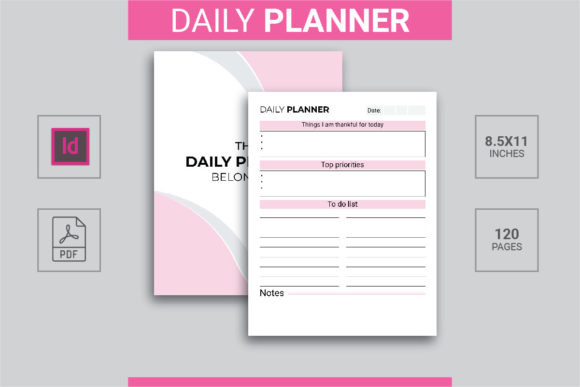
Selecting the right interior template is often the most critical technical decision in low-content book publishing. For creators targeting the productivity niche, a Daily Planner 8.5x11 KDP Interior offers a standardized foundation that balances market demand with production efficiency. This specific format serves as a middle ground between compact journals and oversized desk organizers, providing ample writing space while remaining compatible with standard Amazon KDP printing specifications. Understanding the nuances of this 120-page, bleed-enabled template helps publishers determine if it aligns with their current catalog strategy or if an alternative format would better serve their target audience.
Technical Specifications and Print Readiness
The primary value proposition of a pre-formatted Daily Planner 8.5x11 KDP Interior lies in its adherence to strict printing standards. The 8.5" x 11" dimension is the industry standard for letter-size documents in North America, making it a familiar size for consumers accustomed to office supplies and academic materials. When evaluating this resource, the inclusion of bleed settings is a significant technical advantage. Bleed allows design elements, such as header bars, footer lines, or decorative borders, to extend to the very edge of the page without leaving an unprinted white margin. Many generic templates lack proper bleed configuration, forcing publishers to manually adjust margins or risk rejection during the KDP review process.
This specific interior comprises 120 pages, a count that warrants careful consideration. In the daily planner category, page count directly correlates to the product's perceived utility and price point. A 120-page planner typically covers three to four months of daily entries, depending on whether the layout includes one or two days per page. Publishers must weigh this against thicker alternatives; while 200+ page planners offer annual coverage, they also incur higher printing costs that compress royalty margins. The 120-page specification often represents a strategic compromise, allowing for a lower retail price that encourages impulse purchases while maintaining a healthy profit margin.
Source File Customization vs. Static PDFs
A distinct feature of this package is the provision of both high-quality print-ready PDFs and Adobe InDesign (INDD) source files. This dual-format approach addresses different publisher needs. The PDF serves users who require immediate upload capability with zero learning curve, facilitating rapid market testing. Conversely, the INDD files cater to creators who view the template as a starting point rather than a final product.
Access to source files allows for structural modifications that static PDFs cannot support. Publishers can adjust column widths, change font families to match a specific brand aesthetic, or add proprietary sections like gratitude logs or habit trackers. This level of customization is essential for differentiation in a saturated marketplace. However, it introduces a tradeoff: utilizing INDD files requires proficiency in Adobe Creative Cloud software and access to licensed fonts. Creators without these resources may find the source files less immediately useful, though they still retain long-term asset value should their technical capabilities expand later.
Comparative Analysis: Format and Layout Alternatives
When researching planner interiors, it is necessary to compare the 8.5x11 format against other prevalent sizes and styles. Each variation serves a distinct user behavior and market segment.
- 6x9 Inch Planners: These are significantly more portable and have lower printing costs. They appeal to commuters and students but offer limited horizontal writing space. The 8.5x11 format is superior for users who need room for detailed scheduling, project notes, or larger handwriting, but it sacrifices pocketability.
- Undated vs. Dated Layouts: This 8.5x11 interior is typically undated to prevent inventory obsolescence. Dated planners carry higher perceived value but become unsellable after the calendar year ends. Undated formats provide evergreen sales potential but require the user to manually fill in dates, which some customers find tedious. Publishers must decide if their audience prioritizes convenience or longevity.
- Digital vs. Print Interiors: While digital planning on tablets is growing, print interiors serve a different cognitive need. Physical writing aids memory retention and reduces screen fatigue. This KDP interior targets the analog productivity segment, distinguishing it from hyperlinked PDF planners designed for GoodNotes or Notability.
The choice between these alternatives depends entirely on the intended end-user. A professional organizing a complex workday may prefer the expansive real estate of an 8.5x11 bleed interior, whereas a traveler might prioritize the 6x9 form factor. Recognizing these distinctions prevents the misalignment of product features with customer expectations.
Evaluating Page Count and Content Density
Beyond physical dimensions, content density varies significantly across available templates. Some 8.5x11 planners utilize a "two pages per day" spread, resulting in only 60 usable days within a 120-page book. Others employ a condensed "one page per day" vertical layout. The latter maximizes the lifespan of the book but can feel cramped for users with extensive task lists.
Publishers should analyze competitor reviews to gauge preference. If top-selling 8.5x11 planners in your niche receive complaints about insufficient writing space, a spacious layout becomes a competitive advantage. Conversely, if customers lament that planners run out too quickly, a denser layout or a higher page count alternative may be warranted. The 120-page specification of this interior suggests a quarterly focus, positioning it well for seasonal promotions or goal-setting cycles rather than annual planning.
Strategic Fit and Decision Factors
Determining whether this specific Daily Planner 8.5x11 KDP Interior is the correct asset requires an honest assessment of your publishing workflow and business goals. It is not universally the best option, but it excels in specific scenarios.
Ideal Use Cases:
- New Publisher Validation: For those entering the low-content space, the ready-to-upload PDF eliminates technical barriers, allowing focus on keyword research and cover design.
- Brand Extension: Established authors with existing audiences can use the INDD files to create a planner that visually matches their published books, using consistent typography and color schemes.
- Quarterly Product Lines: The 120-page count aligns perfectly with seasonal releases (e.g., "Summer Focus Planner" or "Q4 Business Organizer"), avoiding the commitment of a full-year diary.
- Bleed-Dependent Designs: Creators whose cover art or interior branding relies on edge-to-edge graphics will benefit from the pre-configured bleed settings, saving hours of manual formatting.
When to Consider Alternatives:
- If your target demographic primarily uses planners on the go, the 8.5x11 size may be too cumbersome; investigate 6x9 or 7x10 options instead.
- If you lack Adobe InDesign access and require unique layout changes not present in the base PDF, you may need to hire a designer or seek a Canva-compatible template.
- If your niche demands specialized tracking (e.g., medical logs, teacher lesson plans), a generic daily planner structure may require excessive modification to be viable.
- If you aim for premium pricing above $15, a 120-page book may lack the perceived heft and value of a 200+ page volume.
Quality Assurance and Upload Best Practices
Even with a professionally prepared template, successful publication requires diligence. Before uploading any Daily Planner 8.5x11 KDP Interior, always download and review the proof copy. Screen resolution differs from print output; what appears crisp on a monitor may show banding in grayscale gradients or misaligned bleed zones when printed. Verify that safe zone margins accommodate binding shift, especially for 120-page books where gutter creep can affect inner margin visibility.
Additionally, ensure metadata alignment. If the interior is undated, avoid using specific years in the title or keywords to maintain relevance. Describe the layout accurately in the book description—mentioning the 8.5x11 size, page count, and bleed features manages customer expectations and reduces negative reviews related to sizing surprises. Transparency regarding the planner’s duration (e.g., "undated 120-page daily log") builds trust and improves conversion rates by attracting the right buyers.
Ultimately, this template functions as a production tool rather than a guaranteed success mechanism. Its value derives from how effectively it supports your broader publishing strategy. By understanding its specifications, comparing it against market alternatives, and aligning its features with genuine user needs, publishers can make informed decisions that enhance both product quality and business sustainability. Feedback from early customers should guide future iterations, whether that means adjusting the INDD master file or exploring entirely new formats based on market response.