Streamlining HVAC Compliance with the KDP Interiors Refrigerant Log Book
Maintaining accurate records of refrigerant usage is not merely a bureaucratic hurdle for HVAC technicians and facility managers; it is a critical component of operational safety, environmental compliance, and equipment longevity. For professionals in the heating, ventilation, and air conditioning industry, the KDP Interiors Refrigerant Log Book serves as an essential organizational tool designed to bridge the gap between daily fieldwork and regulatory requirements. This specialized logbook provides a structured, portable, and editable solution for tracking refrigerant recovery, recycling, and reclamation activities, ensuring that businesses remain compliant with EPA Section 608 regulations and internal maintenance standards.
Understanding the Purpose and Necessity of Refrigerant Tracking
The management of refrigerants involves high stakes. Leaks can lead to costly system failures, while improper documentation can result in significant fines during environmental audits. Many technicians struggle with disparate record-keeping methods, ranging from loose clipboard papers to complex digital apps that may fail in areas with poor connectivity. The KDP Interiors Refrigerant Log Book addresses these challenges by offering a standardized physical format that guarantees data integrity regardless of technological limitations.
This resource is specifically engineered for adults seeking practical solutions to compliance headaches. It moves beyond generic notebooks by providing pre-formatted fields relevant to the trade. Whether you are a solo contractor servicing residential units or a facilities manager overseeing a commercial portfolio, having a dedicated log ensures that every pound of R-410A, R-22, or R-134a is accounted for. The primary goal is to transform chaotic job site notes into a coherent audit trail that protects both the technician and the business owner.
Technical Specifications Designed for Field Utility
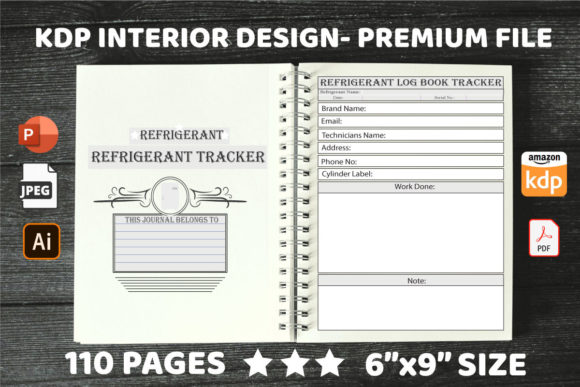
Practicality in the field often comes down to form factor and usability. The KDP Interiors Refrigerant Log Book is produced in a 6″ x 9″ dimension, making it compact enough to fit in a tool bag, glove compartment, or cargo pocket without adding unnecessary bulk. Despite its portable size, it offers substantial capacity with 110 pages, allowing for months of continuous logging before a replacement is needed.
The interior layout is optimized for efficiency rather than aesthetics alone. With two pages allocated per entry or spread, users have ample space to record detailed information without cramping their handwriting. Crucially, the design utilizes a "no bleed" setting. This technical specification is vital for professionals who use markers, gel pens, or write on both sides of the page. Ink bleed-through can render previous entries illegible and unprofessional; the no-bleed formatting ensures that every page remains clean and usable, preserving the integrity of your maintenance history.
Customization Through Editable File Formats
One of the most significant advantages of this specific logbook resource is its adaptability. Unlike mass-market printed books that force users to adapt to a rigid template, the KDP Interiors Refrigerant Log Book is available in PDF, AI (Adobe Illustrator), and PPT (PowerPoint) file formats. This flexibility empowers users to tailor the logbook to their specific operational needs before printing.
- PDF Format: Ideal for users who want a ready-to-print solution that maintains consistent formatting across different devices and printers.
- AI Format: Perfect for graphic designers or branding teams who wish to add company logos, modify vector lines, or adjust the layout to match corporate identity standards.
- PPT Format: Offers an accessible editing platform for users without professional design software, allowing for easy text changes, column adjustments, and slide-based page management.
This editability means that if your local jurisdiction requires specific disclosure language or your company tracks unique metrics like ambient temperature alongside pressure readings, you can modify the template to include these fields. You are not locked into a one-size-fits-all product; instead, you receive a foundational tool that evolves with your business processes.
Practical Applications Across Different User Scenarios
The utility of the KDP Interiors Refrigerant Log Book varies depending on the user’s role and objectives. Understanding these distinct applications helps maximize the value of the resource.
For Independent HVAC Contractors
Solo operators often wear multiple hats, serving as technician, dispatcher, and compliance officer. For this demographic, the logbook acts as a centralized memory bank. By utilizing the 2-page spread, contractors can document the initial diagnosis on one side and the final resolution, including refrigerant weights and leak test results, on the other. This comprehensive view simplifies invoicing and provides immediate proof of service should a customer question the work performed later.
For Facility Management Teams
In larger organizations, consistency is key. Multiple technicians may service the same chiller or rooftop unit over the course of a year. A standardized KDP Interiors Refrigerant Log Book ensures that every team member records data in the same format. This uniformity makes trend analysis possible. Managers can quickly flip through the 110 pages to identify recurring issues, such as a specific unit consistently losing charge, which might indicate a systemic problem rather than isolated leaks.
For Training and Apprenticeship Programs
Educators and senior mentors can use the editable files to create training-specific versions of the logbook. By adding instructional notes or checklist reminders directly into the template, trainees learn proper documentation habits alongside technical skills. The physical act of writing in a structured log reinforces the importance of accountability in handling regulated substances.
Implementation Strategies for Maximum Effectiveness
Acquiring the KDP Interiors Refrigerant Log Book is only the first step; integrating it effectively into daily workflows determines its success. Experts recommend establishing a "log-first" culture where documentation occurs immediately after service completion, rather than at the end of the day when details may fade. Because the book is 6″ x 9″, it should be kept physically attached to the service vehicle or tool kit to remove friction from the recording process.
When utilizing the editable formats, consider creating digital backups. After customizing your PPT or AI file, save a master copy in cloud storage. This ensures that if you need to reorder or print additional copies six months from now, your customized template is preserved exactly as intended. Furthermore, while the physical book serves as the primary field record, many successful businesses photograph completed pages weekly to create a redundant digital archive, combining the reliability of paper with the searchability of digital storage.
Addressing Common Documentation Challenges
Even with the best tools, professionals face obstacles. Illegible handwriting, lost books, and incomplete entries are common pain points. The KDP Interiors Refrigerant Log Book mitigates these risks through thoughtful design. The generous spacing afforded by the 2-page layout reduces crowding, improving legibility. The durable construction implied by the KDP standard suggests a product built to withstand shop environments better than standard office stationery.
Additionally, the ability to edit the file allows users to implement error-proofing measures. For example, you can add checkboxes for mandatory safety steps or pre-print conversion charts directly onto the log pages. These small modifications reduce cognitive load during stressful repairs and ensure that no critical data point is overlooked. By treating the logbook as a dynamic workflow tool rather than a static diary, technicians can elevate their professionalism and operational efficiency.
Final Considerations for Compliance and Organization
In an industry governed by strict environmental regulations, the margin for error is slim. The KDP Interiors Refrigerant Log Book offers a balanced solution that respects the realities of fieldwork while satisfying administrative demands. Its combination of portable 6″ x 9″ sizing, substantial 110-page capacity, and versatile editable formats makes it superior to generic alternatives. Whether you are managing a fleet of service vans or organizing your own contracting business, this resource provides the structure necessary to maintain impeccable records. Ultimately, investing time in setting up and using a dedicated refrigerant log is an investment in peace of mind, ensuring that when inspectors ask for your records, you can present them with confidence and clarity.