Optimizing Your Publishing Workflow with the KDP Interiors Daily Reading Log Book
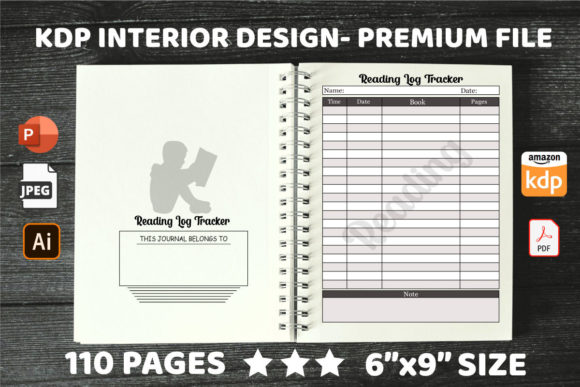
For self-publishers, content creators, and productivity enthusiasts, the difference between a successful product launch and a stalled project often lies in the quality of the interior assets. The KDP Interiors Daily Reading Log Book serves as a foundational element for authors and publishers targeting the niche of bibliophiles, students, and lifelong learners. This specific asset is not merely a collection of blank pages; it is a structured tool designed to track literary consumption, analyze reading habits, and organize intellectual growth. Understanding how to leverage this 6″ x 9″ template within your broader publishing or personal development workflow ensures that the final product meets market expectations for usability and aesthetic consistency.
In the context of Amazon KDP publishing, low-content and medium-content books rely heavily on functional design. A daily reading log bridges the gap between a simple journal and a comprehensive database. For entrepreneurs and marketers creating lead magnets or supplementary materials for educational courses, this log book provides tangible value to the end-user. It transforms passive reading into an active, measurable process. By integrating this specific interior template into your production pipeline, you reduce design time while maintaining professional standards that resonate with adult users aged 20–50 who prioritize organization and self-improvement.
Technical Specifications and Production Standards
Before integrating the KDP Interiors Daily Reading Log Book into a live project, it is essential to understand the technical parameters that govern its performance on print-on-demand platforms. This template adheres to strict specifications that ensure compatibility with Amazon’s printing guidelines and minimize rejection risks during the upload process.
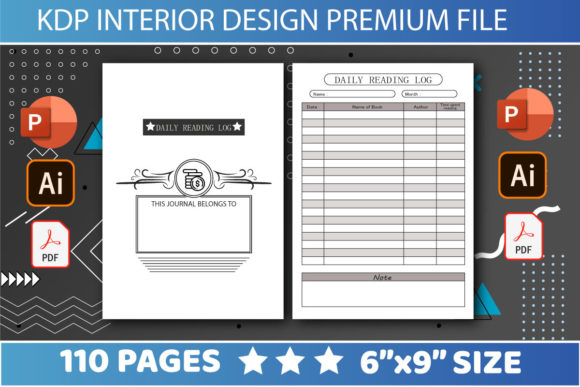
- Trim Size: The 6″ x 9″ dimension is the industry standard for trade paperbacks in this category. It offers sufficient surface area for detailed logging without being cumbersome for daily carry. This size optimizes shelf presence and aligns with reader expectations for portable reference books.
- Page Count: At 110 pages, this interior strikes a balance between perceived value and printing cost efficiency. It allows for approximately three months of daily tracking or extended use for less frequent readers, making it a viable quarterly planner or annual tracker depending on usage intensity.
- No Bleed Configuration: The "No Bleed" setting is critical for text-heavy interiors like reading logs. All content, including headers, footers, and table borders, remains safely within the margins. This eliminates the risk of vital information being trimmed off during production and simplifies the proofing process for creators who may not have advanced prepress experience.
- File Compatibility: Availability in PDF, AI (Adobe Illustrator), and PPT (PowerPoint) formats ensures cross-platform accessibility. Whether you are finalizing a print-ready file or customizing the layout for a specific brand identity, these source files provide the necessary flexibility.
Integration into the Publishing Pipeline
The utility of the KDP Interiors Daily Reading Log Book extends beyond its function as a standalone product. It acts as a modular component within larger creative and business workflows. Understanding where this asset fits in the lifecycle of a project helps maximize return on investment and streamlines execution.
Pre-Launch Validation and Niche Research
During the research phase, this log book template serves as a benchmark for competitive analysis. Publishers can compare the structure of this 110-page interior against best-sellers in the reading journal category to identify gaps in functionality. Does the competition offer space for audiobook tracking? Is there a section for library lending records? By editing the provided AI or PPT files, creators can rapidly prototype variations to test market demand before committing to full-scale cover design and marketing campaigns. This reduces the friction associated with product validation.
Active Customization and Brand Alignment
For educators, bloggers, and coaches, generic interiors rarely suffice. The ability to easily edit this template allows for deep customization that aligns with specific learning objectives or brand aesthetics. A literacy coach might add prompts for vocabulary retention, while a business book club organizer could insert sections for actionable takeaways and networking notes. Because the files are fully editable, the log book transitions from a commodity product to a branded resource. This customization phase is where the asset interacts with other tools; you might import graphics from Canva, adjust typography in Illustrator, or restructure tables in PowerPoint to match your existing course materials or website design language.
Post-Publication Iteration
After publication, user feedback often reveals necessary adjustments. Perhaps readers find the writing lines too narrow or request a dedicated index page. Having access to the original source files means you can update the KDP Interiors Daily Reading Log Book efficiently. Unlike static PDFs purchased from restrictive marketplaces, owning the AI and PPT files grants you perpetual control over the asset. This supports a long-term strategy of continuous improvement, allowing you to release updated editions that address real user pain points and maintain relevance in a competitive marketplace.
Practical Implementation and Editing Workflows
To derive maximum value from this interior, users must adopt a systematic approach to editing and file management. The following workflow considerations ensure high-quality output and operational efficiency.
Software Selection and File Management
While the PDF format is suitable for direct upload, serious publishers should utilize the AI or PPT source files for any modifications. Adobe Illustrator offers vector-based precision for adjusting table grids and line weights, ensuring crisp printing at any resolution. PowerPoint serves as an accessible alternative for those without graphic design training, allowing for drag-and-drop customization of text boxes and shapes. Regardless of the software chosen, always maintain a master copy of the original unedited files. Create versioned duplicates (e.g., ReadingLog_v2_BrandUpdate.ai) to preserve the integrity of the base template and facilitate future revisions.
Margin Safety and Quality Control
Even with a "No Bleed" designation, margin discipline is paramount. When editing the KDP Interiors Daily Reading Log Book, verify that all interactive elements remain at least 0.375 inches from the trim edge and 0.5 inches from the gutter (inner margin). The 6″ x 9″ format requires careful attention to the gutter, especially on a 110-page book where paper thickness affects readability near the spine. Use guide layers in your design software to visualize safe zones. Before final export, conduct a thorough visual inspection of every spread to ensure alignment consistency across facing pages. Misaligned tables or shifting headers are common errors that degrade user experience and signal low production quality.
Typography and Usability Testing
Functionality dictates form in a reading log. When customizing fonts and spacing, prioritize legibility over decoration. Adult users require adequate line height for handwriting and clear contrast between text and background. Test your edited interior by printing sample pages at actual size. Digital screens often misrepresent how fine lines and small typefaces appear on physical paper. If the log includes checkboxes or rating scales, ensure they are sized appropriately for pen or pencil interaction. This tactile verification step prevents costly reprint orders and negative reviews stemming from poor usability.
Strategic Applications Across User Segments
The versatility of the KDP Interiors Daily Reading Log Book makes it applicable to diverse professional and personal contexts. Recognizing these use cases helps tailor marketing messaging and product positioning.
For Freelancers and Content Creators: Use the log as a research management tool. Track sources, cite references, and synthesize ideas for articles, videos, or podcasts. The structured format enforces disciplined note-taking, reducing the time spent searching for lost insights later in the creative process.
For Educators and Tutors: Customize the interior to include curriculum-aligned reflection prompts. Distribute modified versions to students as part of a literacy program. The consistent 6″ x 9″ size fits easily in backpacks alongside textbooks, encouraging habitual engagement outside the classroom.
For Small Business Owners: Leverage the log as a corporate gift or client appreciation item. Branded reading logs position your business as a supporter of intellectual growth and work-life balance. They serve as subtle, high-utility touchpoints that keep your brand visible on desks and nightstands long after initial distribution.
For Personal Development Enthusiasts: Integrate the log into existing productivity systems like Bullet Journaling or Zettelkasten. The pre-printed structure reduces setup friction, allowing users to focus immediately on capturing knowledge rather than drawing tables. This synergy between analog tracking and digital publishing demonstrates how specialized interiors support modern knowledge management practices.
Ensuring Long-Term Asset Viability
Sustainable publishing requires assets that adapt to changing needs. The KDP Interiors Daily Reading Log Book supports longevity through its modular design and editable nature. Regularly audit your interior templates against evolving platform guidelines and market trends. Amazon occasionally updates trim size tolerances or paper quality specifications; having editable source files allows you to comply swiftly without redesigning from scratch.
Furthermore, consider creating derivative products from this single master template. A simplified version for children, an expanded academic edition for researchers, or a genre-specific variant for fiction lovers can all originate from the same 110-page foundation. This multiplicative approach maximizes the ROI of your initial acquisition and editing efforts. By treating this log book not as a disposable commodity but as a core component of your intellectual property portfolio, you build a resilient publishing business capable of scaling with minimal incremental design overhead.
Ultimately, success with low-content publishing hinges on respecting the end-user's need for functional excellence. The KDP Interiors Daily Reading Log Book provides the structural scaffolding necessary to meet that need. Through careful technical adherence, strategic customization, and thoughtful integration into broader workflows, this 6″ x 9″ asset becomes more than just a product—it becomes a reliable instrument for learning, tracking, and growth in an increasingly information-dense world.