KDP Interiors Students Daily Planner: A Practical Asset for Publishers and Professionals
For self-publishers and content creators operating within the Amazon KDP ecosystem, finding high-quality, functional interiors is often more challenging than designing an attractive cover. The market is saturated with generic lined notebooks and basic journals that offer little unique value to the end user. The KDP Interiors Students Daily Planner by De-Team distinguishes itself by moving beyond simple note-taking to provide a structured operational tool. This resource is designed specifically for publishers who want to offer a utility-driven product that serves students, professionals, and administrative staff alike. Rather than being a passive diary, this interior functions as an active tracking system, making it a viable asset for those looking to diversify their low-content book portfolio with high-intent niches.
Technical Specifications and File Flexibility
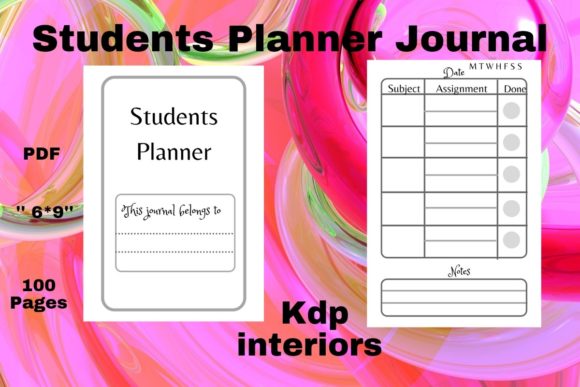
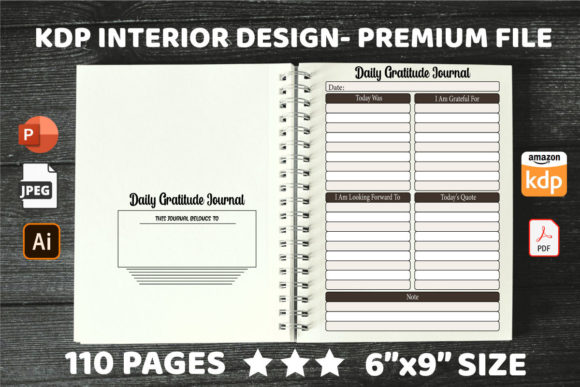
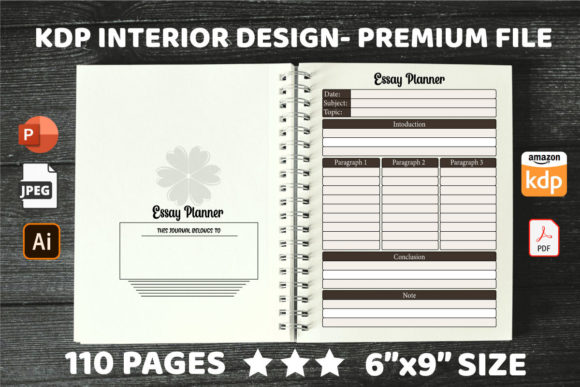
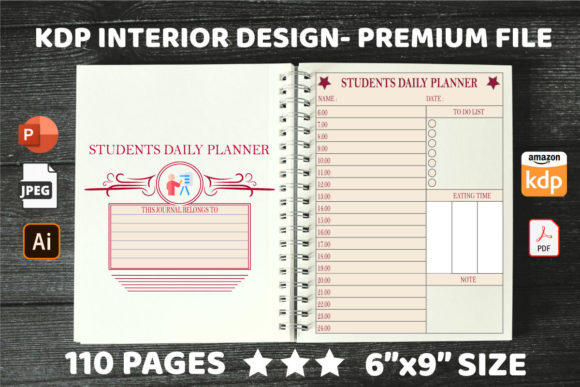
When evaluating digital assets for print-on-demand, technical compatibility is just as important as visual design. This product is engineered with specific KDP standards in mind, reducing the friction typically associated with formatting. The dimensions are set at a standard 6″ x 9″ inches, which remains the most popular trim size for portable planners and logbooks due to its balance of writing space and portability. The file includes 110 pages, providing substantial content without pushing printing costs into premium tiers.
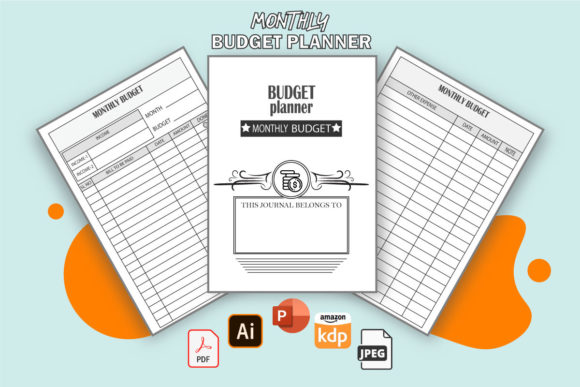
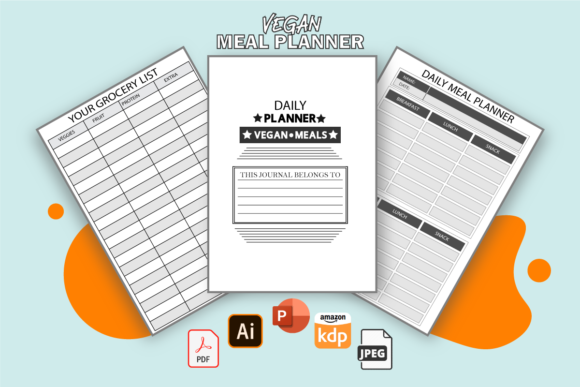
A critical feature for publishers is the No Bleed setting. Many KDP rejections or formatting errors stem from improper bleed management. By utilizing a no-bleed layout, De-Team ensures that margins remain safe and consistent across different printing facilities, significantly lowering the risk of rejected manuscripts. Furthermore, the inclusion of multiple file formats—PDF, AI, and PPT—addresses the varied workflows of modern creators. While PDF is ready for immediate upload, the AI (Adobe Illustrator) and PPT (PowerPoint) files allow for deep customization. This editability is essential for publishers who wish to add branding, modify headers, or create a series of related products without starting from scratch.
Functional Design and Column Architecture
The primary value proposition of this interior lies in its specific column structure. Unlike generic daily planners that offer blank hourly slots, this logbook is architected for accountability and follow-through. Each page includes dedicated fields for:
- Date and Time: For precise chronological logging.
- Name of Contact and Phone Number: Essential for networking and client management.
- Subject: To categorize the interaction or task immediately.
- Follow-Up Action Required: A prompt that converts passive notes into active tasks.
- Initials: For verification in shared or professional environments.
- Completion Checkbox: A visual cue for task closure and progress tracking.
This level of granularity transforms the book from a simple diary into a compliance and productivity tool. For students, particularly those in clinical rotations, law school, or business programs, this format mirrors professional documentation standards. For office workers and administrators, it serves as an audit trail. The design anticipates the user's need to retrieve specific information quickly, rather than sifting through paragraphs of unstructured handwriting. This functional density increases the perceived value of the physical book, potentially leading to better reviews and lower return rates for KDP publishers.
Target Audience and Niche Applications
While the product title includes "Students Daily Planner," limiting marketing efforts solely to academic demographics would underutilize the asset. The interior’s structure supports several distinct high-value niches. Understanding these audiences allows publishers to tailor metadata and cover designs effectively.
Academic and Clinical Students
Students in nursing, social work, teaching, and counseling are required to maintain logs of patient interactions, student observations, or case studies. This interior provides a pre-formatted template that satisfies academic requirements for record-keeping. It helps students organize practicum hours and ensures they capture necessary contact details and supervisor initials, which are often mandatory for accreditation.
Call Centers and Support Teams
In high-volume communication environments, agents must track customer issues and promised callbacks. The columns for phone number, subject, and follow-up action align perfectly with ticket resolution workflows. As a physical backup to digital CRM systems, this logbook offers reliability during outages or for sensitive data that requires offline handling.
Walk-In Advising and Front Desk Operations
Receptionists and advisors in busy offices need to track who visited, why, and what was promised. The "initials" and "completion checkbox" features introduce accountability in shared workspace scenarios. This makes the planner suitable for medical front desks, university advising centers, and municipal service counters where tracking foot traffic and inquiries is part of the operational protocol.
Entrepreneurs and Freelancers
Solopreneurs often struggle with separating meeting notes from actionable tasks. This planner forces a distinction between the "subject" of a conversation and the "follow-up action required." For real estate agents, insurance brokers, and consultants, this structure supports relationship management and ensures no lead falls through the cracks during busy periods.
Evaluating Usability and Long-Term Value
From a user experience perspective, the effectiveness of a logbook depends on how quickly it can be used in real-time. The 6x9 size ensures the book fits in a bag or on a crowded desk, encouraging consistent use. The column widths appear balanced to accommodate legible handwriting without wasting paper. However, publishers should be aware that highly structured interiors can be polarizing; users who prefer freeform journaling may find the rigid columns restrictive. Therefore, accurate product descriptions and interior preview images are vital to attract the right buyer and manage expectations.
The long-term value of this product for KDP sellers is rooted in its evergreen nature. Unlike dated planners that become obsolete after a specific year, this undated log format can be sold year-round indefinitely. The ability to edit the source files also extends the product's lifecycle. A publisher could create a "Nursing Clinical Log" version in blue, a "Real Estate Client Tracker" in black, and a "Student Internship Journal" in green, all using the same core De-Team interior. This scalability maximizes the return on investment for the initial asset acquisition.
Practical Considerations for Implementation
While the KDP Interiors Students Daily Planner offers significant advantages, successful implementation requires attention to detail. Publishers should verify the margin settings against current KDP guidelines before uploading, even with the no-bleed designation, as platform specifications can shift. Testing the print quality via a proof copy is recommended to ensure the line weight and font size are optimal for writing; lines that are too faint or text that is too small can negatively impact user satisfaction.
Additionally, because this is a functional tool, the cover design should reflect utility and professionalism. Abstract art may confuse buyers looking for a serious organizational aid. Covers featuring clear typography, relevant iconography (such as checklists, phones, or calendars), and visible interior previews tend to perform better for this category. Highlighting the specific columns in the book description and A+ Content will help differentiate this product from generic competitors.
Ultimately, this interior represents a shift toward utility-first publishing. It solves a specific problem—organized tracking of interactions and tasks—for a diverse group of users. For KDP creators, it offers a reliable, editable foundation that supports multiple niche strategies. By focusing on the practical application of the columns and the flexibility of the file formats, publishers can build a sustainable catalog of productivity resources that serve genuine market needs. Whether targeting students managing clinical hours or professionals organizing client follow-ups, this planner provides the structural integrity necessary for a high-quality print product.