Evaluating KDP Interiors Expense Planner Templates for Professional Record Keeping
Selecting the right organizational tool for Amazon KDP publishing requires balancing technical specifications with practical utility. When researching a KDP Interiors Expense Planner, specifically those designed for activity logging and financial tracking, it is essential to look beyond the cover design and evaluate the interior architecture. The De-Team 1 template represents a specific category of functional interiors that prioritize data entry efficiency over decorative elements. For publishers and end-users aged 20 to 50 who are comparing resources for busy offices, call centers, or personal business management, understanding the distinct features of this 6″ x 9″ format is critical for making an informed decision.
Technical Specifications and Editability Standards
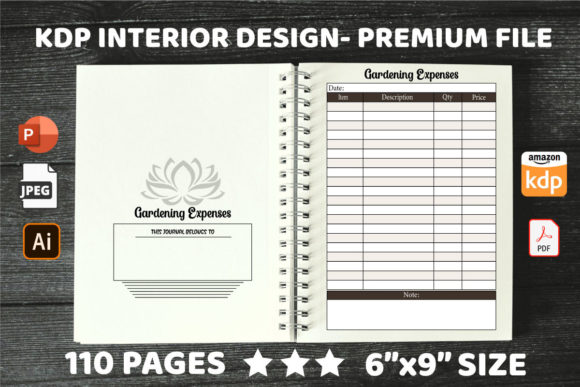
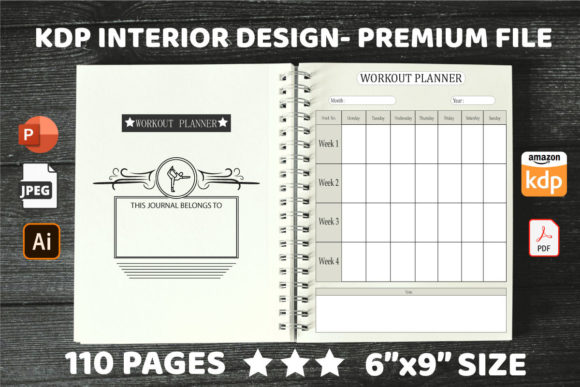
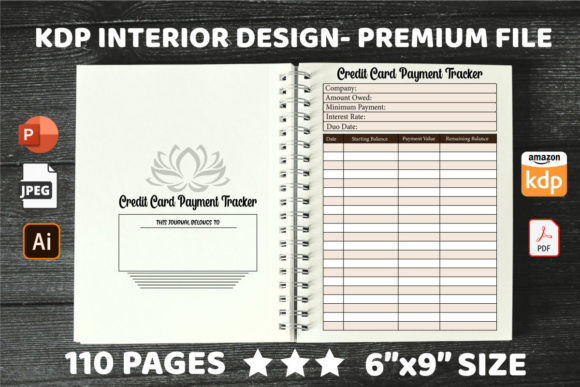
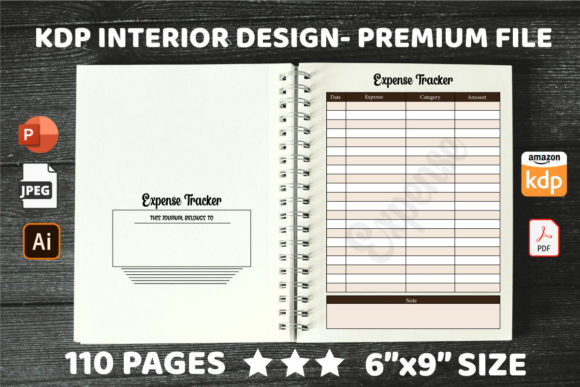
The foundation of any successful KDP interior lies in its adherence to platform standards and its flexibility for customization. This specific resource offers dimensions of 6″ x 9″ inches across 110 pages, configured with a no-bleed setting. This size is significant when comparing options because it strikes a balance between portability and writing space. Unlike larger 8.5″ x 11″ planners that may feel cumbersome for daily carry, or pocket-sized notebooks that lack sufficient room for detailed expense logs, the 6×9 format fits standard bag sizes while providing adequate horizontal space for tabular data.
A primary differentiator for professional publishers is file accessibility. This product includes PDF, AI (Adobe Illustrator), and PPT (PowerPoint) files. When evaluating alternatives, many competitors offer only flattened PDFs, which locks the user into a static design. The inclusion of editable source files allows for necessary modifications, such as adjusting column widths, changing fonts to match a brand identity, or adding specific disclaimers. For users creating a series of expense planners, this editability reduces long-term production time. However, it also introduces a tradeoff: users must possess basic proficiency in Illustrator or PowerPoint to leverage these files effectively. If you lack design software skills, the PDF version remains usable, but the value proposition shifts from "customizable asset" to "ready-to-print template."
The No-Bleed Configuration Advantage
The "no bleed" specification is a deliberate technical choice that impacts both printing costs and usability. In comparison to full-bleed interiors where ink extends to the paper's edge, no-bleed designs maintain a safety margin. For expense planners and log books, this is often superior because it ensures that binding never obscures critical data columns. When comparing this against full-bleed artistic journals, the functional log book prioritizes readability and archival integrity over aesthetic immersion. Publishers should note that no-bleed files generally have fewer rejection risks during the KDP review process, as there is less concern regarding trim variance affecting content.
Functional Layout Analysis: Columns and Data Capture
The core utility of this KDP Interiors Expense Planner lies in its structured column system. Effective record keeping requires specific fields that generic notebooks lack. This template includes dedicated columns for date, time, name of contact, phone number, subject, follow-up action required, initials, and a completion checkbox. When researching alternatives, buyers should assess whether the column headers align with their specific workflow.
- Date and Time: Essential for chronological auditing and verifying billable hours.
- Contact Information: Consolidates communication records, reducing the need to cross-reference separate address books.
- Subject and Follow-Up: Transforms the book from a passive record into an active task management tool.
- Initials and Checkbox: Provides accountability and visual progress tracking, which is particularly valuable in shared office environments or student advising centers.
Compared to blank ledger paper or simple lined journals, this pre-formatted structure reduces cognitive load. Users do not waste mental energy deciding how to organize entries; they simply fill in the designated fields. However, this rigidity is also a limitation. If your expense tracking requires multi-line descriptions or complex categorization codes not present in the header, this layout may feel restrictive. In such cases, a bullet journal approach or a digital spreadsheet might serve as a better primary tool, with this physical book serving as a secondary verification log.
Comparing Physical Logs vs. Digital Alternatives
In an era dominated by apps and cloud-based accounting software, the relevance of a physical expense planner warrants examination. Digital tools excel at calculation, searchability, and backup. However, physical logs like this De-Team 1 template offer distinct advantages in specific contexts. For walk-in advising centers and call centers, a physical book provides immediate access without boot-up times, login barriers, or screen fatigue. It also serves as a tangible artifact of compliance and effort, which can be psychologically reinforcing for students and employees building professional habits.
When choosing between this physical template and a digital subscription service, consider the environment. High-security facilities where phones are prohibited, field work locations with poor connectivity, and educational settings focused on habit formation are ideal use cases for this product. Conversely, if automatic bank reconciliation or real-time collaboration is required, this analog tool should be viewed as a supplement rather than a replacement.
Target Audience Fit and Use Case Evaluation
This specific interior configuration is optimized for distinct user groups. Understanding these personas helps determine if the product matches your needs or if a different category of planner would be more appropriate.
Busy Offices and Call Centers
For high-volume environments, the inclusion of "initials" and "completion checkboxes" transforms the book into an accountability instrument. Supervisors can quickly audit logs without reading every entry. Compared to loose-leaf tracking sheets that can be lost or disorganized, the bound 110-page format ensures continuity. The tradeoff here is capacity; 110 pages may last only a few months in a high-volume call center, necessitating frequent reordering or volume bundling strategies.
Students and Academic Advising
Students and advisors benefit from the "follow-up action" column, which bridges the gap between noting an expense or meeting and actually resolving it. Unlike standard academic planners that focus solely on class schedules, this hybrid expense/activity log supports internship tracking, research grant management, and career counseling sessions. The 6×9 size is comparable to standard textbooks, making it easy to shelve or carry alongside course materials.
Small Business Owners and Freelancers
For solopreneurs, this planner serves as a tax preparation aid. The structured capture of contact names and subjects creates an audit trail that memory alone cannot provide. While accounting software tracks numbers, this book captures context. When comparing this to generic business ledgers, the addition of "time" and "follow-up" makes it more suitable for service-based businesses (consultants, therapists, tutors) than for retail or inventory-heavy operations.
Decision Factors: Strengths and Tradeoffs
Making a final selection involves weighing the specific attributes of this KDP Interiors Expense Planner against potential drawbacks. No single resource is universally optimal.
Strengths:
- Versatile File Formats: The trio of PDF, AI, and PPT accommodates varying skill levels and customization needs.
- Optimized Trim Size: 6×9 balances portability with functional table width.
- Action-Oriented Design: Moves beyond passive recording to include accountability markers and follow-up prompts.
- Print Safety: No-bleed design minimizes production errors and maximizes writable area.
Tradeoffs and Limitations:
- Page Count Constraints: 110 pages is a standard KDP threshold but may require quarterly replacement for heavy users.
- Fixed Column Structure: While efficient for intended uses, it lacks flexibility for non-standard data types.
- Software Dependency: Full utilization of editable files requires access to Adobe Illustrator or PowerPoint.
- Analog Nature: Lacks automated calculations, backups, or integration with other financial systems.
When to Choose This Resource vs. Alternatives
This De-Team 1 template is likely the right choice if you require a compliant, ready-to-publish interior that balances professional aesthetics with functional data capture for service-oriented or administrative tracking. It is particularly strong for publishers looking to create niche-specific log books for advising, consulting, or small business management.
However, readers should explore alternatives if they require extensive narrative space (consider a wider format or journal-style interior), automated financial processing (consider software integration), or highly specialized industry compliance fields not covered by the standard columns. Additionally, if you intend to sell this as a premium product, verify that the license terms allow for commercial distribution and consider how much unique value you can add through cover design and marketing, given that the interior is a templated asset.
Ultimately, the effectiveness of this KDP Interiors Expense Planner depends on alignment between its fixed structural features and the dynamic needs of the end-user. By carefully evaluating the column headers, file formats, and physical dimensions against specific operational requirements, publishers and professionals can select a tool that genuinely enhances organization rather than merely adding another notebook to the shelf.